





Mechanical Repairs for the Food and Beverage Industry
High-temperature processing is critical in the food and beverage industry, but it brings significant risk. Equipment failures, material contamination and regulatory violations can threaten product quality and safety. According to Department of Agriculture data, foodborne illnesses cost the United States over $74 billion in 2023.
Food and beverage (F&B) operations depend on boilers, furnaces, kilns and incinerators. Facility managers must maintain uptime while ensuring these systems meet strict food-grade standards. To adhere to these requirements, F&B equipment needs regular maintenance and mechanical repair services that keep it operational. These systems also depend on refractory solutions that help ensure food-grade compliance.
This guide covers essential mechanical services and specialized solutions for food and beverage refractories that protect your products and operations.
Essential Mechanical Repair Services for F&B Equipment
Equipment failures in food processing create immediate operational and safety risks. Mechanical repair and maintenance services form the foundation of operational reliability.
Examples of mechanical services for F&B equipment include:
- Boiler repair and maintenance: Steam generation, heating and sterilization systems are the backbone of food processing operations. Regular servicing addresses pressure control issues, optimizes efficiency and maintains safety systems before problems escalate into costly shutdowns.
- Furnace and kiln servicing: Temperature precision determines product quality in baking, roasting and drying operations. Maintaining burners, repairing control systems and servicing ventilation equipment prevents the temperature fluctuations that compromise batch consistency and waste energy.
- Incinerator repair: Regulatory compliance depends on properly functioning waste management systems. Combustion equipment and emission control components require ongoing maintenance to meet environmental standards and prevent operational disruptions.
While mechanical services maintain equipment operation, facilities face an additional requirement. They require specialized refractory materials that meet food-safety standards.
Understanding Food-Grade Refractory Solutions
Refractory materials line high-temperature equipment interiors. These are not mechanical components but specialized materials engineered for food-contact applications. These materials are heat-sensitive and don’t introduce contaminants, transfer unwanted substances or compromise the safety of your product at any stage of thermal processing. Standard industrial refractories may leach chemicals or degrade, creating food safety risks.
Food-grade refractories must meet strict requirements:
- Approved for specific location and function: The most stringent rules apply to surfaces in direct contact with food. These food-contact zones require materials explicitly approved under regulations like Title 21 Section 175.300, which governs refractory materials used in food processing. Noncontact applications, such as insulation layers or structural supports, are subject to less restrictive standards but still require careful material selection to prevent indirect contamination.
- Guarantee exceptional chemical purity: Inert materials are nonnegotiable in food-grade applications. At high temperatures, even trace impurities can volatilize and migrate into your product, introducing off-flavors, odors or harmful substances. Materials listed on the FDA’s Generally Recognized as Safe list under Title 21 Part 184 meet this purity threshold. They remain chemically stable and nonreactive throughout their service life.
- Verified by recognized standards: Compliance isn’t self-declared. Third-party certification from organizations like NSF International, which verifies materials against standards such as NSF/ANSI 51, provides independent confirmation that a material meets food-grade requirements. This verification process evaluates chemical composition and real-world performance under processing conditions.
Understanding these criteria allows you to differentiate between truly food-grade refractories and standard industrial materials.
Common Refractory Applications in Food and Beverage Operations
Food-grade refractories support various thermal processing equipment. Each application demands materials tailored to specific operating conditions, product chemistries and regulatory requirements.

Industrial Ovens for Baking and Drying
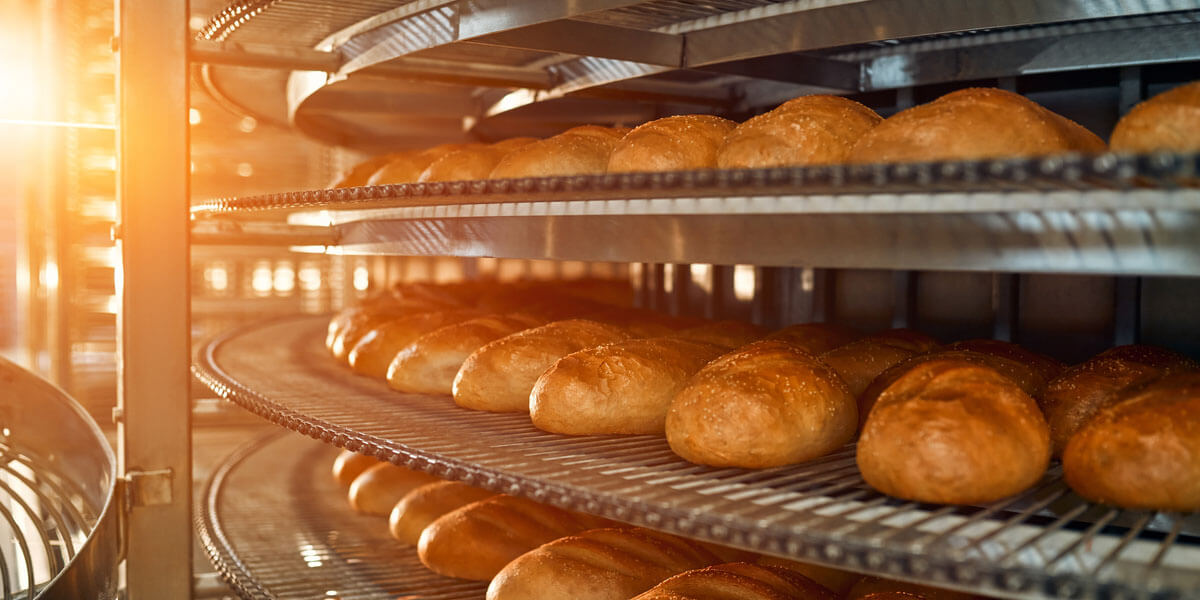
Commercial bakeries, snack food producers and drying operations rely on ovens that deliver consistent, even heat distribution across large processing chambers. The refractory materials lining these ovens must maintain thermal stability across repeated heating cycles while preventing any particulate shedding that could contaminate the product.
Material selection focuses on low thermal conductivity to improve energy efficiency and high resistance to thermal shock from frequent temperature cycling. A clean baking environment depends on refractory materials that remain structurally sound and chemically inert throughout their service life.
Roasters and Kilns
Heat is necessary for coffee roasting, nut processing and grain malting. Any chemical interaction between the refractory material and the product can alter flavor profiles or introduce unwanted compounds.
Finding the right refractory solutions for food kilns is especially important in applications where even minor contamination affects the final product’s sensory characteristics. Nonreactive linings that resist cracking and spalling under high-heat conditions preserve product integrity and support batch-to-batch quality.
High-Temperature Furnaces and Incinerators
Not all refractories in food and beverage facilities come into direct contact with the product. High-temperature furnaces used for waste incineration or steam generation still require robust refractory systems to manage extreme heat, contain combustion byproducts and maintain operational safety. While these applications face less restrictive food-contact regulations, material durability and energy efficiency remain critical for controlling operational costs and minimizing unplanned downtime.
How to Select the Right Refractory Solution for Your Needs
Choosing the right refractory material requires evaluating multiple performance factors against your specific operational conditions.
1. Evaluate Your Operating Temperature
Maximum continuous operating temperature and peak temperature are the first data points to establish. A refractory rated for a commercial baking oven operating at 500° F will fail catastrophically in a roasting kiln that reaches 1,800° F. Material classifications exist for specific temperature ranges. Exceeding those limits compromises structural integrity and food safety.
Document your equipment’s actual operating profile, including any temperature spikes during startup or process upsets, to guarantee adequate safety margins in your material selection.
2. Consider the Food Product’s Chemistry
Not all food products interact with refractories the same way. High-acidity products, such as tomatoes, introduce corrosive conditions that degrade certain refractory compositions over time. Salt-rich environments accelerate chemical attack on materials not formulated for chloride resistance. Fats and oils can penetrate porous refractories and create sanitation challenges and potential contamination pathways.
Understanding your product’s chemistry allows you to select materials with the appropriate chemical resistance.
3. Assess Needs for Physical Durability
Thermal cycling and mechanical stress test refractory systems continuously. Thermal shock resistance prevents cracking when equipment undergoes rapid heating or cooling, a common occurrence in batch processing operations. Abrasion resistance matters in applications where product movement, cleaning tools or operational processes subject surfaces to mechanical wear.
Material failure in either category creates contamination risks — cracks harbor bacteria and spalled particles migrate into your product stream.
4. Analyze for Energy Efficiency
Insulating properties directly impact your bottom line. A key component of energy efficiency is using food-safe high-temperature insulation to prevent heat loss, reduce fuel consumption and maintain stable processing temperatures. Better insulation translates to faster heat-up times, more consistent temperature control and lower operational costs.
When comparing materials, evaluate thermal conductivity ratings alongside food-grade certification to identify solutions that deliver compliance and performance.
5. Understand Material Formats
Refractory materials come in two primary formats.
- Monolithic castables offer joint-free installations that eliminate gaps where contaminants could accumulate. They conform to complex geometries and provide flexibility for custom equipment configurations.
- Traditional firebricks deliver proven durability in high-wear applications and enable targeted repairs without a full system replacement.
Your choice depends on equipment design, expected service life and maintenance capabilities. For detailed specifications on both formats, review McNeil’s refractory materials for food-grade applications.
Professional Installation and Maintenance for Both Services
Both mechanical repairs and refractory installations require specialized expertise.
Mechanical repairs require certified technicians who understand the specifications of food processing equipment. Regular maintenance schedules prevent failures that disrupt production. Comprehensive mechanical services cover diagnostics, parts replacement and system optimization to keep boilers, furnaces, kilns and incinerators operating safely and efficiently.
Refractory installations present different technical demands. Proper material curing removes moisture and forms chemical bonds. Rushed curing compromises structural integrity. Expert installation eliminates joints and gaps where bacteria could colonize. Ongoing maintenance, including kiln relining in the food industry, preserves compliance and performance. Specialized refractory repair services maintain the integrity of food-grade systems.
Keep Your Food and Beverage Operations Running With McNeil
With experience in demanding industries and a track record since 1937, McNeil provides the mechanical repairs and refractory solutions your operation requires. Contact McNeil today to discuss equipment services with specialists in food and beverage processing.
